Plaster Repair Las Vegas, NV
Las Vegas has one of the widest temperature swings of any major US city. Summer days reach 115 degrees. Winter nights drop below freezing. That range puts stress on every framing member, every fastener, and every joint in your home. The result is more cracking than you see in most other markets. We repair the crack and address the cause so the same crack does not reopen in the next temperature cycle.
5 Stars
Written Estimate Before Work Starts
Plaster Matched to Original
Serving All of Clark County
Why Plaster Repair Is Different From Drywall Repair
Plaster Is a Three-Coat System
Original plaster walls have a scratch coat, a brown coat, and a finish coat applied over wood or metal lath. Repairing any layer requires understanding what is beneath it — you cannot simply fill the top layer and expect it to hold.
Drywall Compound Does Not Bond to Plaster Long-Term
Joint compound applied directly over damaged plaster will shrink, crack, and eventually separate. Plaster repair requires a bonding agent and compatible material — either lime-based plaster or a compatible patching compound.
Keys Break Over Time
Plaster adheres by pressing through gaps in the lath and forming keys — mushroom-shaped anchors behind the lath face. When keys break, sections of plaster loosen and sound hollow. Hollow areas need to be reanchored or replaced.
Las Vegas Heat Accelerates Plaster Failure
Extreme temperature swings expand and contract the wall assembly repeatedly. This stresses the bond between plaster coats and causes cracking that accelerates faster in Las Vegas than in cooler, more humid climates.
Damage Type |
Common Cause |
Affects Substrate? |
Repair Approach |
|
Hairline Surface Crack |
Thermal movement, minor settling |
Often yes |
Finish coat patch with bonding agent |
|
Map Cracking |
Original plaster dried too fast |
Sometimes |
Re-skim with compatible plaster |
|
Hollow Section |
Broken keys behind the lath |
Yes |
Reanchor or remove and replace |
|
Water Damage |
Roof or plumbing leak (source fixed) |
Yes |
Remove damaged section, replaster |
|
Missing Section |
Impact, renovation damage |
No |
Patch with drywall backer or replaster |
What Types of Plaster Damage Do We Repair?
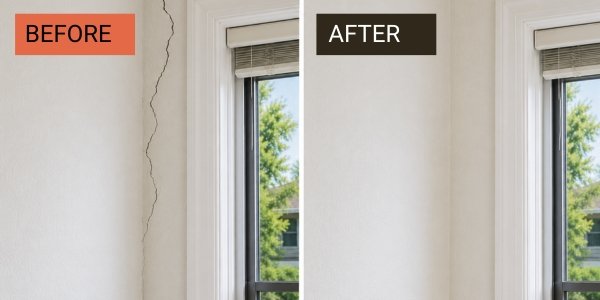
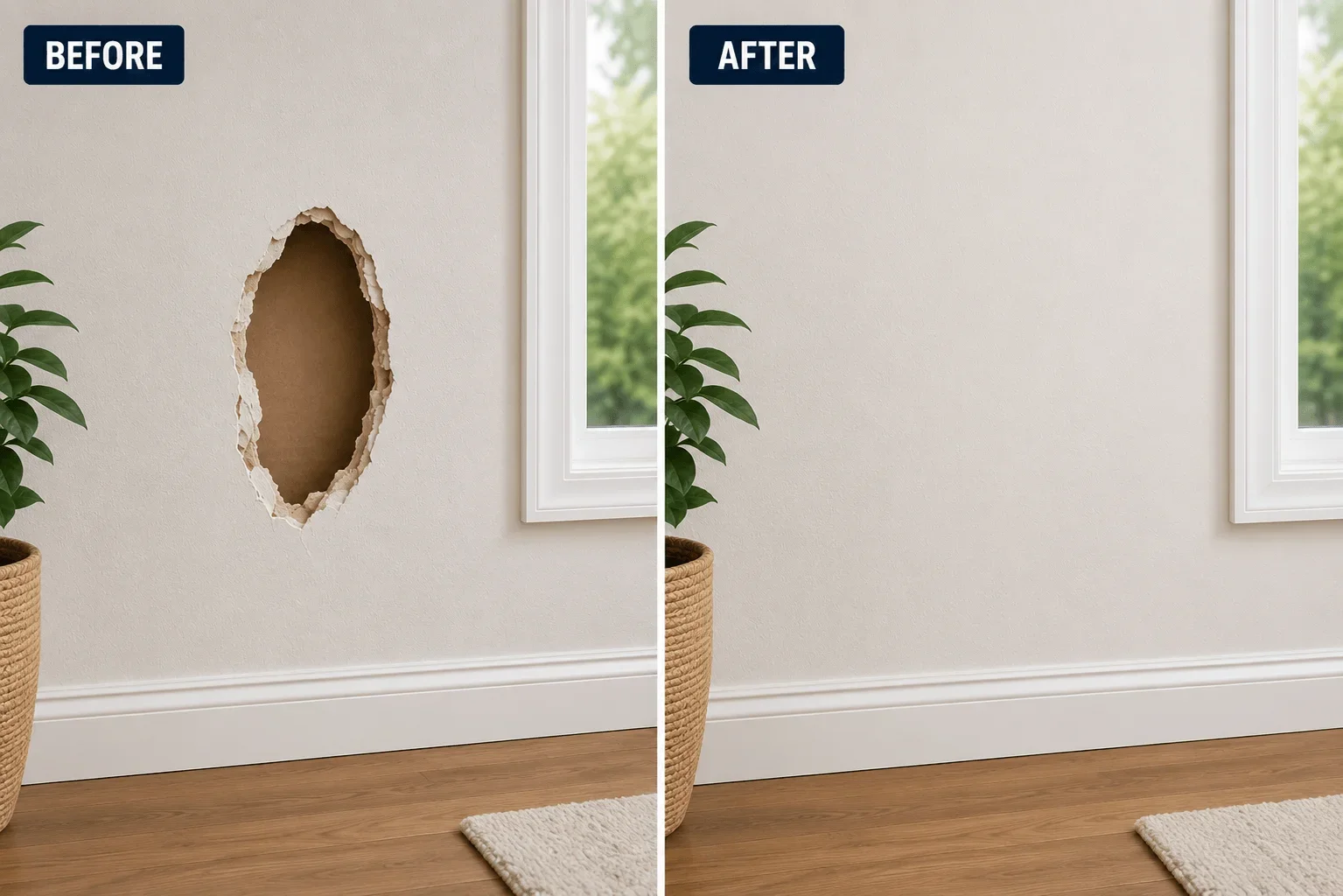
Plaster damage ranges from cosmetic hairline cracks to full sections that have separated from the lath. The repair method depends on how deep the damage goes and whether the substrate is still sound.
Why It Matters |
What You Get |
|
Bonding agent applied first |
New plaster will not bond to old plaster without it — the repair fails within months |
|
Matching coat applied in the correct sequence |
Each coat must cure before the next is applied — rushing this step causes the repair to crack |
|
Finish texture matched to original |
Sand finish, skip trowel, and smooth finish each require a different application technique |
How Do I Know If My Wall Is Plaster or Drywall?
A crack that runs parallel to the framing and is under an eighth of an inch wide is cosmetic in most cases. A crack that runs perpendicular to the framing, is wider than a quarter inch, shows vertical offset on either side, or has visible deflection in the ceiling plane should be evaluated by a structural engineer before any cosmetic repair. We do not close structural concerns with compound.
Will the Repair Match the Original Plaster Surface?
A plaster repair that is correctly done does not crack again at the same spot. Repairs that fail are almost always missing the bonding agent step or used the wrong patching material. We use the correct materials for every coat we touch.
How We Repair Plaster in Las Vegas
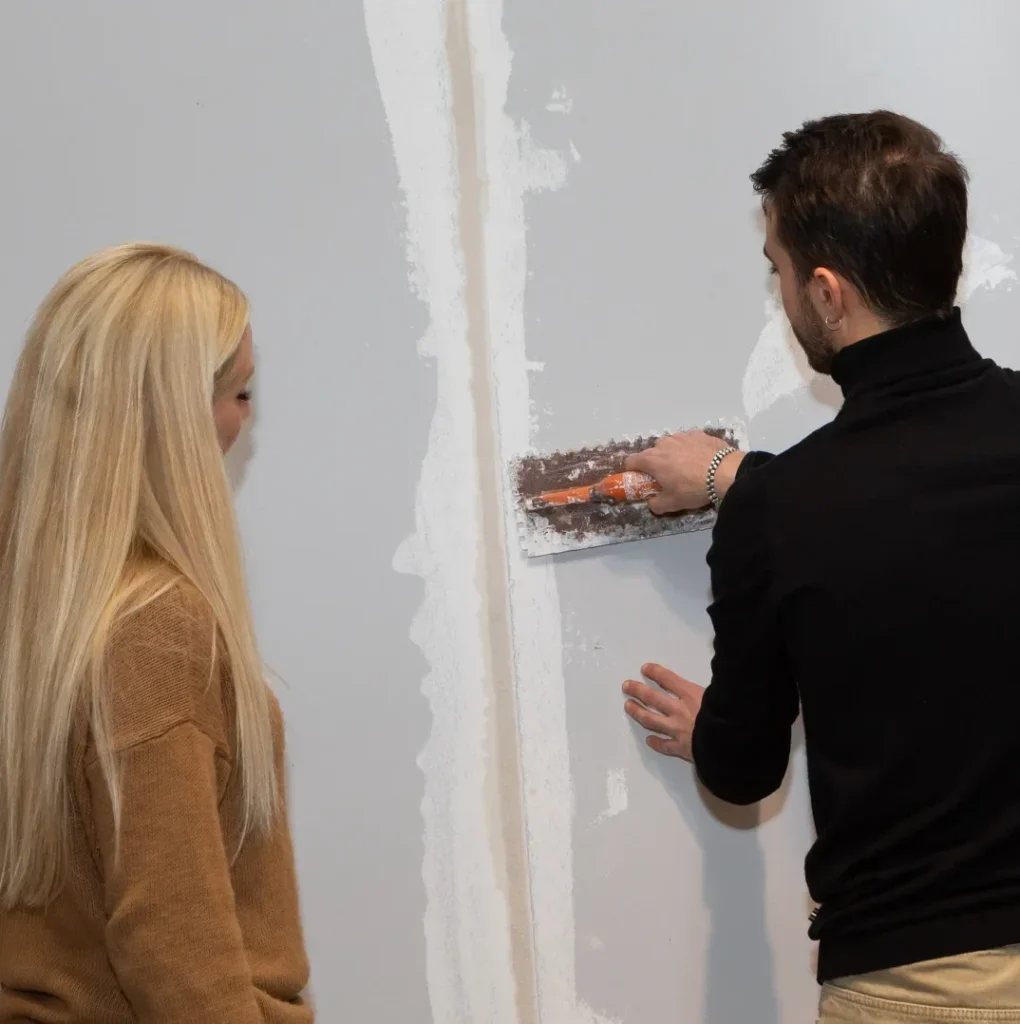
Every plaster repair follows a specific sequence tied to the coat system. Rushing a layer before the previous one has cured causes the repair to fail. We work at the correct pace for plaster, not drywall speed.
1) Assess the Substrate
We tap the wall to identify hollow sections, measure crack depth, and check the condition of the lath. The repair method depends on how many coats are affected.
2) Remove Loose Material
Loose plaster and failed sections are removed back to sound material. Lath is inspected and repaired or reinforced as needed before any new material is applied.
3) Apply Bonding Agent
A bonding agent is applied to all prepared surfaces before any new plaster is mixed. This is the step that most DIY repairs skip — and the reason most DIY repairs fail.
4) Build the Base Coat
Compatible plaster or patching compound is applied in the correct thickness for the coat being replaced. Each layer is scratched or keyed to accept the next.
5) Float and Level
Once the base coat has cured, the finish coat is floated level with the surrounding wall. Feathering the edges prevents a visible ridge at the repair boundary.
6) Match Finish Texture
The finish texture is matched to the surrounding plaster — sand finish, smooth, or skip trowel. We check in raking light before leaving to confirm the surface reads as one continuous wall.
What Plaster Repair Costs in Las Vegas
|
Plaster Repair Scope |
Estimated Cost |
|---|---|
|
Hairline crack, finish coat only |
$100 to $200 |
|
Section repair (up to 2 sq ft) |
$400 to $750 |
|
Hollow section reanchor or replace |
$300 to $600 |
|
Water-damaged section (source fixed) |
$200 to $450 |
|
Large area replaster (over 10 sq ft) |
“Our 1960s home had plaster walls throughout and a section in the living room that was cracked and starting to separate. They matched the original sand finish perfectly. You honestly cannot see where the repair is.” — Spring Valley, Las Vegas |
Plaster Repair Questions Answered
Ready to Restore Your Plaster? We Las Vegas.
Related services: Drywall Hole Repair Las Vegas | Water Damage Drywall Repair | Texture Matching | Ceiling Repair
One call or one form. We respond within one business day. Written estimate before any work starts. Call Now: (725) 337-6885 Serving Las Vegas Valley and all of Clark County, NV
Las Vegas Homes and Original Plaster Walls
Many Las Vegas homes built between the 1950s and early 1970s were constructed with three-coat plaster walls. This was the standard building method in the region before drywall became the dominant material in new construction during the mid-1970s. The oldest neighborhoods in the valley — areas around Charleston Boulevard, Fremont Street, and the original Spring Valley tracts — contain a large number of homes with intact original plaster.
Three-coat plaster is a scratch coat over metal lath, followed by a brown coat, and finished with a white coat that is either smooth or textured. When it holds, it is extremely durable. When it fails, the failure is usually visible as a map crack pattern, a bulge where the plaster has separated from the lath, or a section that sounds hollow when tapped.
Repairing original plaster correctly requires matching the base material and the finish coat texture. Filling a plaster crack with drywall compound alone will not hold long term, because the two materials expand and contract at different rates in the Las Vegas heat. Call (725) 337-6885 if you have plaster walls in a Las Vegas home and want an accurate assessment of what the repair involves.
Why Las Vegas Homeowners Choose Us for Plaster Repair
Plaster repair is not the same as drywall patching. The base material, the finish coat, and the texture all need to match the existing wall for the repair to disappear. We have worked on original plaster walls in Las Vegas homes across multiple neighborhoods, including Spring Valley, Summerlin West, and older housing tracts near downtown.
We carry full commercial liability insurance, and every technician on our team has hands-on experience with three-coat plaster systems and the textured finish matching that older Las Vegas homes require. Before we start any plaster job, we walk the damage with you and explain what the repair will involve. Call (725) 337-6885 to schedule a free assessment.
Frequently Asked Questions
Why does plaster crack differently than drywall?
Plaster is rigid and brittle. When the wall or framing moves, plaster cracks rather than flexing. Drywall, being a composite material with a paper face, handles minor movement better. In Las Vegas, the heat cycle causes more movement than plaster was designed to absorb.
Can I patch plaster with drywall compound?
Not reliably. Joint compound shrinks as it dries and does not bond chemically to plaster. A patch made with joint compound will often pull away from the edges within one to two years. Proper plaster repair uses a bonding agent and compatible patching compound.
Is it worth repairing plaster or should I replace with drywall?
Plaster walls are denser and quieter than drywall. If the lath is intact and the damage is isolated, repairing plaster is usually worth it. Converting to drywall is a larger project that affects trim, window reveals, and electrical boxes. We can tell you which is the better option after looking at the specific area.
How do I find a plaster repair specialist in Las Vegas?
We have worked on original plaster in older Las Vegas homes throughout the valley. Most drywall contractors do not have experience with three-coat plaster systems. Ask before you book.
Do Las Vegas homes still have original plaster walls?
Yes. Homes built in Las Vegas between the 1950s and early 1970s commonly have original three-coat plaster walls. These are found in older neighborhoods near Charleston Boulevard, the original Spring Valley tracts, and areas near downtown Las Vegas. If your home was built before 1975 and you have not done a full gut renovation, your walls are likely original plaster. Call (725) 337-6885 and we can confirm during a free assessment.
Can you match the texture of original Las Vegas plaster?
In most cases, yes. Common plaster textures on Las Vegas homes include sand finish, smooth coat, and early orange peel. We sample the existing texture before we apply the finish coat to get as close a match as possible. Call (725) 337-6885 for a quote.
Areas We Serve
We provide drywall repair services throughout the Las Vegas Valley. Call (725) 337-6885 to confirm we cover your area.