Drywall Repair Centennial Hills, NV
Las Vegas has one of the widest temperature swings of any major US city. Summer days reach 115 degrees. Winter nights drop below freezing. That range puts stress on every framing member, every fastener, and every joint in your home. The result is more cracking than you see in most other markets. We repair the crack and address the cause so the same crack does not reopen in the next temperature cycle.
5 Stars
Written Estimate Before Work Starts
Serving Centennial Hills Homeowners
Serving All of Clark County
Why Las Vegas Homes Crack More Than Most
Thermal Cycling at Ceiling Seams
Ceiling joints carry the most movement because the roof absorbs direct sun. Vaulted ceilings in Summerlin, Seven Hills, and MacDonald Highlands show cracks at the peak seam where two drywall panels meet. The crack runs straight, parallel to the framing, and reappears each spring if repaired with only a skim of compound.
thermal roof movement at Interior Ceiling Walls
Engineered trusses in homes built from the 1980s onward flex slightly as temperature changes. When the bottom chord lifts in winter, it pulls the interior wall partition with it. The crack shows at the ceiling line where the interior wall meets the ceiling. It is a clean, horizontal crack that closes in summer and reopens in winter. This is not structural damage.
settlement cracks at Door and Window Frames
Door frames and window frames are rigid points in a flexible wall. As the wall moves with temperature, stress concentrates at the corners of those openings. angled wall cracks at 45 degrees from the corners of a door frame are the most common pattern. These cracks are cosmetic in most cases but reopen if repaired without addressing the joint.
Why Centennial Hills Homes Need Drywall Repair
Las Vegas averages a 30 to 40 degree difference between daytime high and nighttime low for most of the year. Wood framing expands and contracts with that swing every single day. Over years, the joints in your drywall move with the framing. The tape separates. The compound cracks. The crack appears.
Damage Type |
Typical Cause |
DIY Friendly? |
Needs Tape? |
|
Nail Pops |
Settling, compound shrinkage |
Often yes |
Usually no |
|
Seam Crack |
Failed joint tape/compound |
Sometimes |
Usually yes |
|
Ceiling |
Framing movement, thermal shift |
Rarely |
Often yes |
|
Recurring |
Movement or moisture |
No |
Depends |
|
Near Door/Window |
Wall assembly movement |
No |
Often |
Why the Crack Came Back After Someone Fixed It
The most common reason is a surface skim over failed tape. When a crack opens in your wall or ceiling, it is usually because the joint tape has separated from the drywall paper beneath it. A contractor who applies fresh compound over the old tape without re-taping has not fixed the joint. They have covered it. When the framing moves again in the next thermal cycle, the compound over the failed tape cracks in the same place.
Why It Matters |
What You Get |
|
Diagnose before patching |
Centennial Hills soil shifts seasonally. Skipping diagnosis means patching the same spot twice within a year. |
|
Right materials for desert climates |
Summer heat dries compound too fast here. We use the right compound weight and schedule coats for NLV conditions. |
|
Texture matched before we start |
Texture mismatches show under raking light. We check every repair at an angle before leaving every job. |
How Do I Know If My Ceiling Crack Is Structural or Cosmetic?
A crack that runs parallel to the framing and is under an eighth of an inch wide is cosmetic in most cases. A crack that runs perpendicular to the framing, is wider than a quarter inch, shows vertical offset on either side, or has visible deflection in the ceiling plane should be evaluated by a structural engineer before any cosmetic repair. We do not close structural concerns with compound.
Will the Crack Come Back After You Repair It?
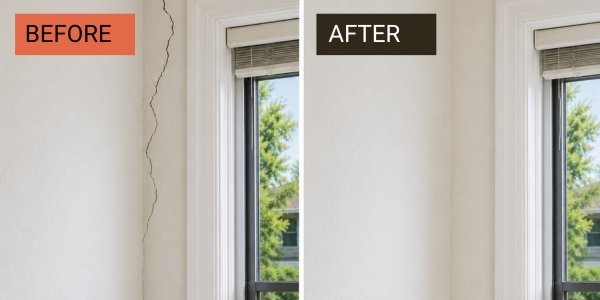
A correctly repaired joint does not crack in the same place. The failure that causes recurrence is covering old tape without removing it. We open the seam, remove the failed tape, re-tape with fiber mesh, and float back in thin coats. Some ceiling movement is seasonal in Centennial Hills homes. When a crack at the ceiling line keeps returning, the correct solution is a control joint or cove detail, not repeated compound repairs.
How We Repair Drywall Cracks in Las Vegas
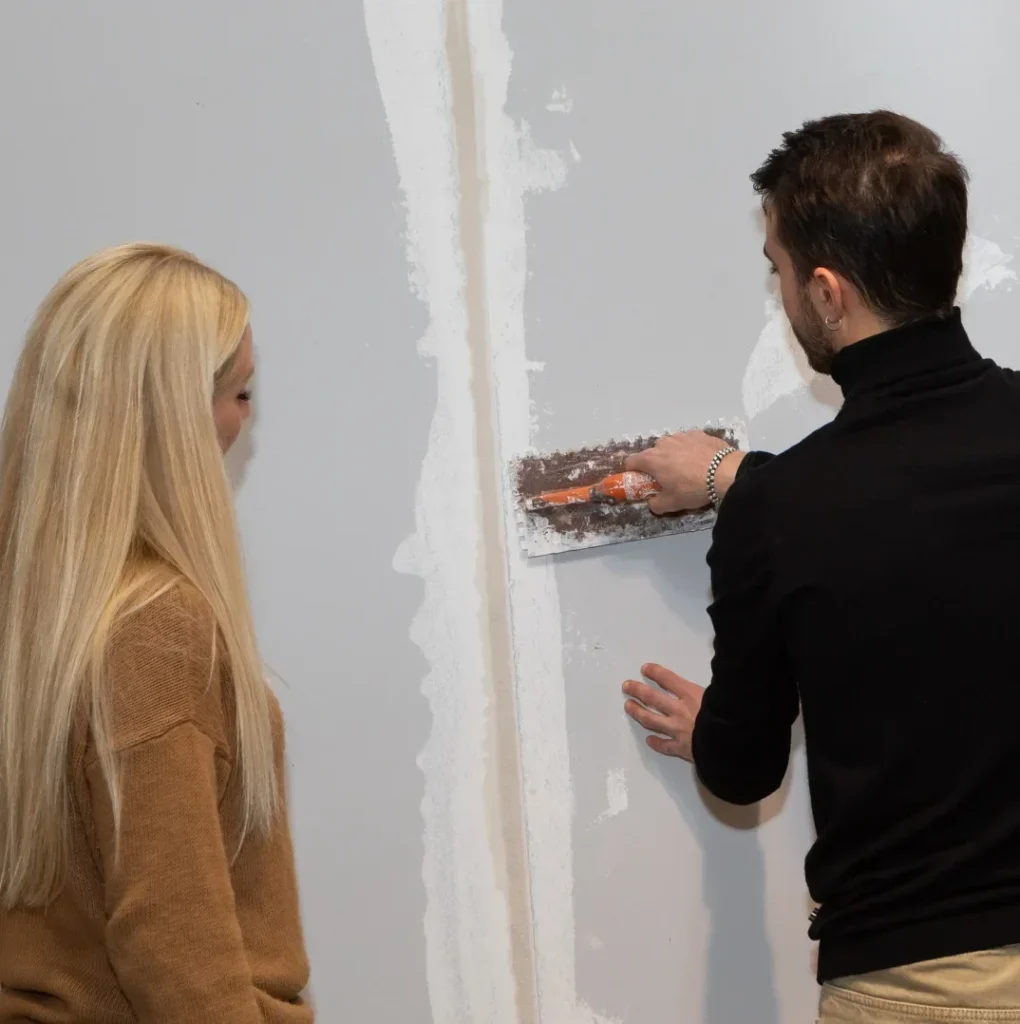
Every repair follows the same order. Skipping steps is how repairs reopen.
1) Inspect and Assess
We identify the damage type, check for moisture or structural causes, and walk you through what we find before starting any work.
2) Prep the Surface
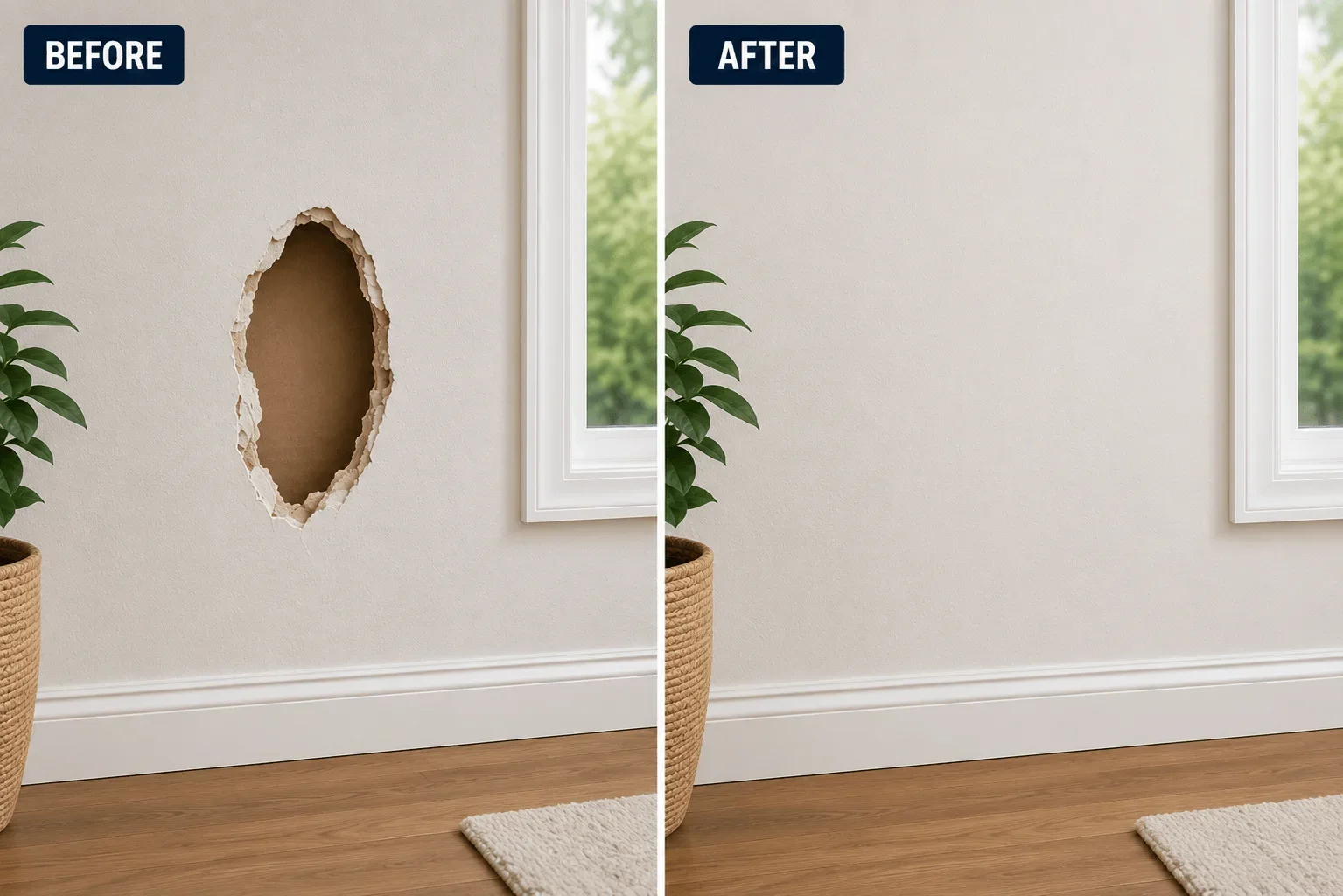
We protect your floors and trim, cut out any damaged drywall cleanly, and secure backing if needed for a solid repair.
3) Patch or Replace
Holes and soft panels get a fresh drywall section. Cracks get fiberglass tape and the right compound for Centennial Hills heat cycles.
4) Tape and Mud
We tape seams and apply compound in multiple thin coats, feathering edges wide enough to disappear in any light.
5) Sand and Prime
We sand to a smooth finish, clean up all dust, and prime the repair area so texture and paint bond correctly.
6) Texture and Final Check
We match your existing texture — knockdown, orange peel, smooth, or sand — then inspect under raking light before we leave.
What Drywall Crack Repair Costs in Las Vegas
|
Repair Type |
General Range |
|---|---|
|
Small hole repair (under 4 inches) |
$100 to $200 |
|
Medium hole repair (4 to 12 inches) |
$200 to $400 |
|
Water-damaged ceiling section |
$300 to $600 |
|
Seam or crack repair with tape and float |
$100 to $300 |
|
Nail pop repair (5 to 10 pops) |
$75 to $150 |
Drywall Crack Repair Questions Answered
Ready to Fix Your Drywall? We Serve All of Centennial Hills, NV.
Related services: Drywall Hole Repair Las Vegas | Water Damage Drywall Repair | Texture Matching | Ceiling Repair
One call or one form. We respond within one business day. Written estimate before any work starts. Call Now: (725) 337-6885 Serving Las Vegas Valley and all of Clark County, NV
Texture Finishing Services in Centennial Hills
Drywall repair is only half the job. The other half is matching the existing texture on the surrounding wall so the patch disappears. In Centennial Hills, the most common interior wall textures are knockdown, orange peel, skip trowel, and smooth coat. Each requires a different technique to match correctly.
Knockdown is the most common texture in Centennial Hills homes built between the 1990s and 2010s. It is applied by spraying a thick mud pattern and knocking it flat with a knife before it sets. Orange peel uses a finer spray pattern and is left as-is. Skip trowel is applied by hand with a curved knife to create an irregular layered pattern. Smooth coat requires a full skim coat and sanding — the most labor-intensive of the four.
We also offer texture finishing as a standalone service. If you have an existing patch that was left bare, or a repaired area that does not match the surrounding wall, we can come in for texture finishing only. Call (725) 337-6885 to discuss what texture your walls have and what the repair will look like.
Why Centennial Hills Homeowners Choose Us
We carry full commercial liability insurance and every technician is background-checked. We have worked on drywall repairs across Centennial Hills neighborhoods including Aliante, Eldorado, and Carey Park. Before we leave any job, we inspect the finished surface under raking light — the same way a professional painter or home inspector will check it. Call (725) 337-6885 to schedule a free assessment.
Frequently Asked Questions
Why does drywall in Centennial Hills crack more than other climates?
Desert soil in Centennial Hills expands and contracts with temperature and moisture swings. This constant movement stresses drywall joints, especially at corners and ceilings. Patching without addressing root cause just delays the next repair.
Can I repair drywall myself in Centennial Hills?
Hairline cracks under 1/8 inch wide are cosmetic and can often be painted over with elastomeric paint. Cracks wider than 1/4 inch, cracks running diagonally from window corners, or cracks that come with sticking doors or windows need professional assessment. These can signal structural movement that paint alone will not fix.
How do I know if my Centennial Hills ceiling stain is from water?
Press lightly on the area. If the drywall feels soft or spongy, there was active moisture. A yellow or brown ring usually means a past or ongoing leak. We check for moisture before any repair to make sure the source is sealed.
How long does a drywall patch last in Centennial Hills?
A properly taped, primed, and textured repair should last 10 to 20 years — or indefinitely if the underlying cause is fixed. Repairs that skip tape or use a single coat of compound often crack back within one to two seasons.
What textures do you match for drywall repairs in Centennial Hills?
We match knockdown, orange peel, skip trowel, and smooth coat — the four most common interior wall textures in Centennial Hills homes. We test the match on a scrap board before applying it to the repair. Call (725) 337-6885 to discuss what texture your walls have and whether it can be matched.
Do you offer texture finishing as a standalone service in Centennial Hills?
Yes. If you have an existing drywall patch that was left unfinished, or a section that does not match the surrounding wall texture, we can come in for texture finishing only. Call (725) 337-6885 to schedule a visit.
Areas We Serve
We provide drywall repair services throughout the Las Vegas Valley. Call (725) 337-6885 to confirm we cover your area.